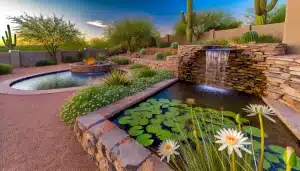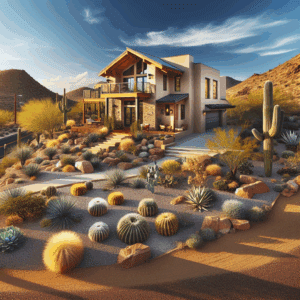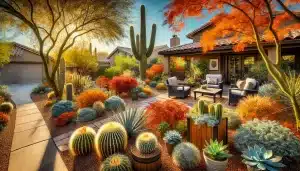
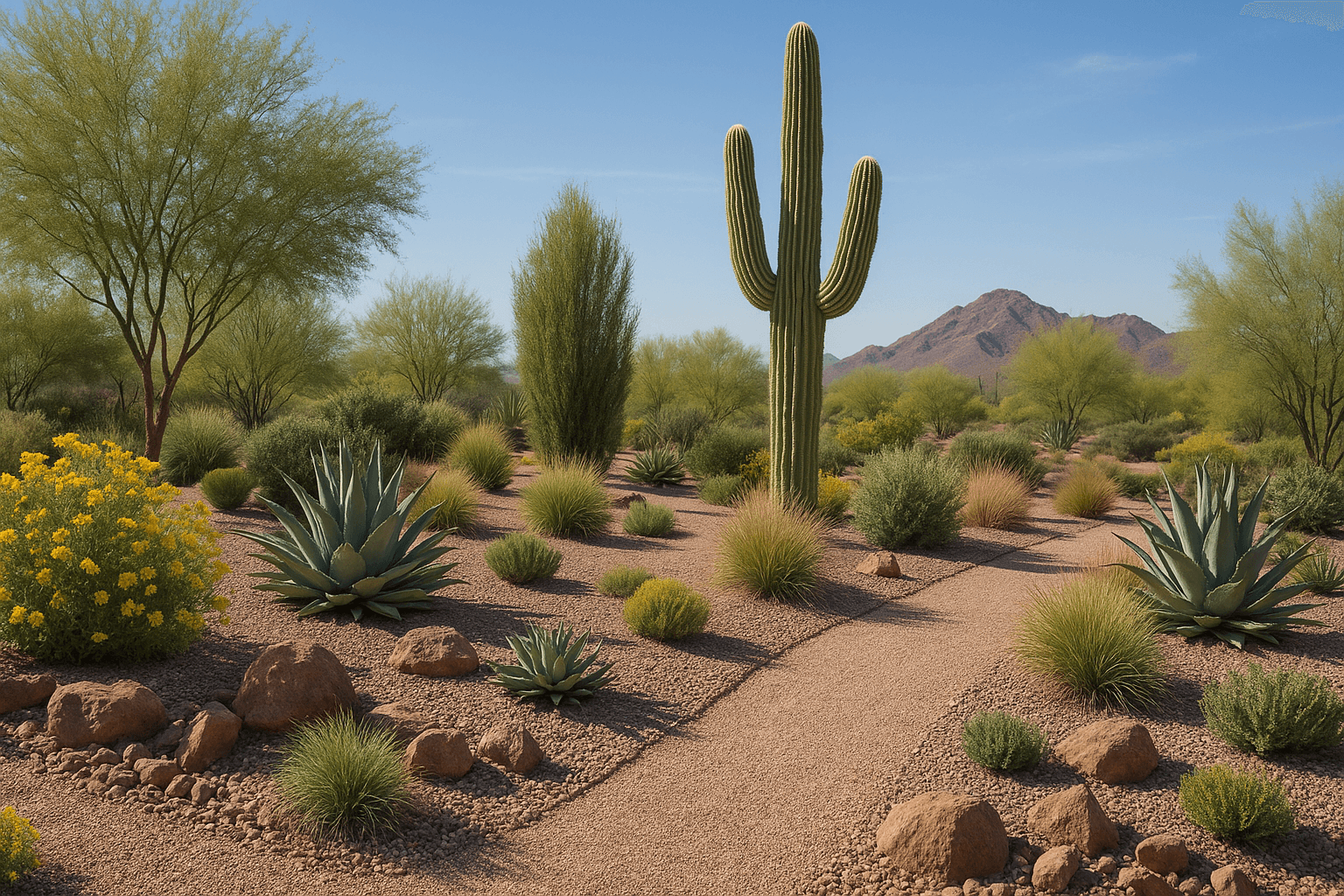
Living out here in Queen Creek, you know exactly what the sun feels like by mid-afternoon. It’s relentless. Honestly, it’s one of the reasons we love it here—the endless blue skies, the stunning view of the San Tan Mountains, and that distinct desert vibe you just can’t get anywhere else. But that sun? It demands respect. Especially when you’re trying to keep a yard looking green without draining your bank account on the water bill.
You might be thinking that having an eco-friendly yard means you just stop watering everything and let it turn into a dust bowl. Or maybe you picture a yard that is nothing but red gravel and a single, sad-looking cactus. Let me tell you, that couldn’t be further from the truth. Eco-friendly landscaping—or sustainable desert design—is actually about working with our environment rather than fighting a losing battle against it.
Here’s the thing: when you align your landscaping with the local climate, you don’t just save water. You save time. You save money. And you end up with an outdoor space that actually thrives in the heat instead of just barely surviving. Let’s look at how we can make that happen for your home.
Contents
- 1 Wait, What Does Eco-Friendly Even Mean in Arizona?
- 2 The Magic of Xeriscaping (It’s Not Just Rocks)
- 3 Let’s Talk About Water (Because We Have To)
- 4 The Great Turf Debate: Real vs. Artificial
- 5 Hardscapes That Don’t Bake Your House
- 6 The Unsung Hero: Mulch and Rock
- 7 Lighting the Night Without Wasting Power
- 8 Putting It All Together
Wait, What Does Eco-Friendly Even Mean in Arizona?
It sounds like a buzzword, doesn’t it? Like something people say when they want to sell you expensive recycled straws. But in the context of Queen Creek landscaping, being eco-friendly is really just being practical. It boils down to three main things: water conservation, soil health, and reducing the “heat island” effect in your own backyard.
We aren’t trying to recreate a lush English garden here. If you try to force hydrangeas to grow in our caliche clay soil, you’re going to have a bad time. And so are the hydrangeas. Instead, we focus on practices that make sense for the Sonoran Desert. It’s about being smart with resources.
You know what? It’s also about maintenance. A yard that is fighting the climate requires constant attention—fertilizers, massive amounts of water, and constant trimming. A yard designed for the desert? It settles in. It gets comfortable. It lets you enjoy your weekend instead of sweating over a lawnmower.
The Magic of Xeriscaping (It’s Not Just Rocks)
People hear “xeriscape” and they panic. They think “zero-scape.” But xeriscaping is lush, colorful, and incredibly varied if you do it right. The core idea is grouping plants by their water needs and using efficient irrigation. It’s zoning your yard.
Imagine this: you have a high-use zone right by your back patio. Maybe a small patch of grass for the dog or the kids, or some potted plants that need a little extra love. That’s your “oasis” zone. But as you move further out toward the perimeter of the yard, you transition to plants that can practically survive on rainfall alone once they’re established.
Using native plants is the cheat code here. Plants like the Texas Sage (with those beautiful purple blooms right before the rain), Red Yucca, or the iconic Agave Parryi are built for this. They have evolved over thousands of years to say, “115 degrees? No problem.” By choosing these, you aren’t just saving water; you’re creating a habitat for local birds and pollinators. It brings the yard to life.
Let’s Talk About Water (Because We Have To)
Water is liquid gold in Arizona. We all know it. Yet, I see so many Irrigation Systems in Queen Creek spraying water onto the sidewalk at 2:00 PM. That water evaporates before it even hits the ground. It hurts to watch.
Smart irrigation technology has changed the game completely. We aren’t just talking about a timer you buy at the hardware store. We are talking about smart controllers that connect to local weather stations via WiFi. These controllers know if it rained last night. They know if it’s going to be too windy to run the sprinklers efficiently. They adjust the schedule automatically.
Also, let’s ditch the spray heads for the shrubs. Drip irrigation is where it’s at. Drip lines deliver water directly to the root zone, right where the plant drinks. There’s no evaporation, no runoff, and no watering the weeds in between your prized bushes. It’s a surgical strike for hydration.
The Great Turf Debate: Real vs. Artificial
This is a tough one. I get asked about this constantly. “Should I put in Artificial Turf?” Here is the honest truth: synthetic grass saves a ton of water. Zero watering required. That is a massive eco-friendly point in its favor. It also stays green forever and you never have to mow it.
But—and this is a big but—it gets hot. Like, really hot. If you have dogs, you have to be careful in the summer because that synthetic surface can burn their paws. Plus, it doesn’t cool the air around your home the way real grass does through transpiration.
So, what’s the eco-friendly play? If you want real grass, keep the area small. Don’t do wall-to-wall sod. Do a functional patch, maybe 400 square feet, and use a drought-tolerant variety like Bermuda or Paspalum. If you go artificial, choose a high-quality turf with “cool technology” infill to keep the temps down, and maybe shade that area with a nice Palo Verde tree.
Hardscapes That Don’t Bake Your House
You know that feeling when you walk across a parking lot in July and you can feel the heat radiating up your legs? That’s the heat island effect. Concrete holds heat. A lot of it. When we cover our yards in solid concrete slabs, we are basically surrounding our homes with heaters that run all night long.
A better approach? Permeable pavers or travertine installed over sand. These materials allow the ground to breathe a little. Plus, when we get those crazy monsoon micro-bursts—you know the ones, where the sky opens up for twenty minutes—permeable surfaces let that water soak into the ground rather than flooding your patio or running off into the street.
Travertine is particularly great for Queen Creek homes because it stays cooler to the touch than concrete pavers. It’s a natural stone, so it reflects sunlight rather than absorbing it. It looks high-end, but it’s actually a functional choice for keeping your outdoor living space usable in the summer.
The Unsung Hero: Mulch and Rock
Soil in the desert needs a blanket. If you leave bare dirt exposed to the sun, the moisture evaporates instantly, and the top layer bakes into a hard crust that water can’t penetrate. That’s bad news.
In Arizona landscaping, “mulch” usually means crushed granite (gravel), but organic mulch has its place too. A layer of rock ground cover acts as insulation. It keeps the soil underneath cooler and prevents evaporation. This keeps the roots of your plants happy.
Organic mulch (like wood chips) is great around the base of trees. As it breaks down, it improves that heavy clay soil we deal with out here. Just keep it away from the very trunk of the tree to prevent rot. A proper layer of ground cover can reduce your water needs by huge margins. It’s simple, but it works.
Lighting the Night Without Wasting Power
Eco-friendly doesn’t stop when the sun goes down. In fact, desert nights are the best time to be outside. You want to see your yard, right?
Low-voltage LED lighting is the standard now. The old halogen bulbs used to pull a lot of power and get incredibly hot. LEDs use a fraction of the electricity and last for years. We can use them to up-light your Ironwood trees or path-light your walkway.
Solar lights are an option, too, but I’ll be honest with you—sometimes the cheap ones you stick in the ground don’t last through the intense UV exposure we get here. The plastic gets brittle and cloudy. If you go solar, invest in quality fixtures. But usually, a hardwired LED system is more reliable and still very energy efficient.
Putting It All Together
Creating an eco-friendly yard in Queen Creek isn’t about sacrifice. It’s about being clever. It’s about looking at your yard and saying, “How do I make this beautiful while respecting the desert?”
When you choose native plants, you get color and life. When you install smart irrigation, you get lower bills and healthier roots. When you pick the right hardscapes, you get a cooler patio. It’s a win-win situation. And let’s be real, nobody misses pushing a lawnmower in 110-degree heat.
If you’re looking at your yard right now and thinking it could be doing more for you (and costing you less), maybe it’s time for a change. We know the soil, we know the climate, and we know how to make Queen Creek homes look incredible.
Ready to transform your outdoor space into a sustainable oasis?