
Let’s be real for a second. Living in Queen Creek means dealing with heat that feels like opening a preheated oven door, especially when summer hits its stride. If you have a traditional grass lawn, you’ve probably felt that sinking feeling when the water bill arrives. It’s painful, isn’t it? Trying to keep a lush green carpet alive here is like trying to keep an ice sculpture from melting in a sauna. It’s fighting nature, and nature usually wins.
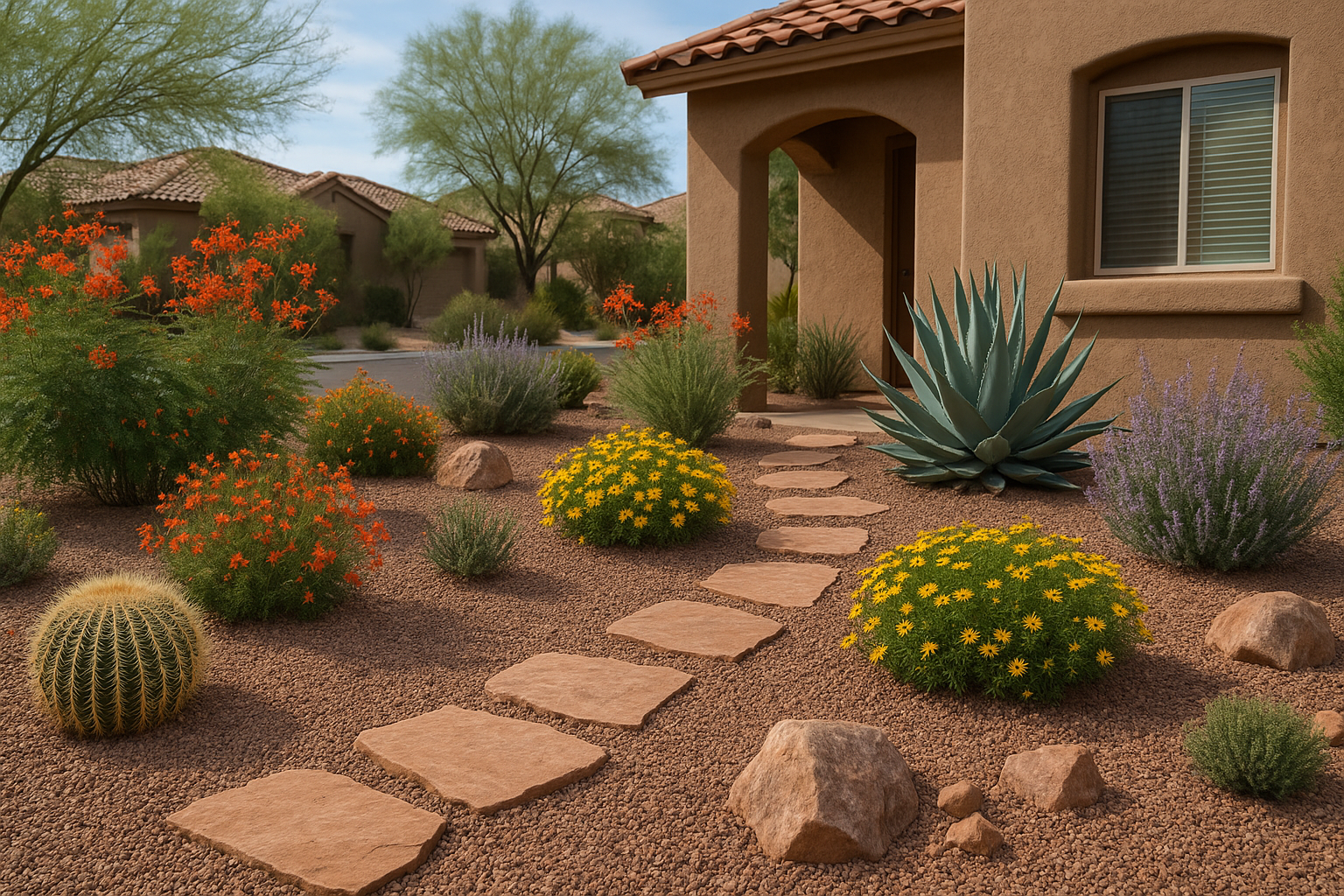
That’s why you’re hearing the word xeriscape thrown around so much lately. But here’s the thing—a lot of people get it wrong. They think xeriscaping means dumping a truckload of gravel in the front yard, sticking a lone cactus in the middle, and calling it a day. That’s not a garden; that’s a gravel pit. True xeriscape design is lush, colorful, and teeming with life. It just happens to sip water instead of guzzling it. It’s about working with our desert environment rather than against it. So, if you are ready to ditch the mower and save some cash, let’s walk through how to build a landscape that actually belongs here.
Contents
- 1 Step 1: Get a Plan Together (And Understand Hydrozones)
- 2 Step 2: Say Goodbye to the Grass
- 3 Step 3: It’s All About the Soil
- 4 Step 4: The Fun Part – Picking Your Plants
- 5 Step 5: Irrigation (Smarter, Not Harder)
- 6 Step 6: The Mulch (Which is usually Rock)
- 7 Wait, Is It Really “Zero” Maintenance?
- 8 Why This Matters for Your Wallet
- 9 Need a Hand with the Heavy Lifting?
Step 1: Get a Plan Together (And Understand Hydrozones)
Before you go buying plants because they looked pretty at the nursery, stop. You need a game plan. The biggest mistake homeowners make is what we call “plant plotting”—just sticking things in the ground wherever there’s a hole. In the landscaping biz, we use a concept called hydrozoning. It sounds technical, but it’s actually pretty simple.
Basically, you want to group plants together based on how thirsty they are. You wouldn’t put a tropical hibiscus right next to a desert spoon, right? One needs a drink every other day; the other wants to be left alone for weeks. If they are on the same valve, one dies of thirst, or the other rots from too much love. Grouping your plants saves you massive headaches later.
Grab a piece of paper and sketch your yard. Mark where the shade falls in the afternoon and which spots get baked by the sun all day. That “death zone” near the driveway where the concrete reflects heat? You’re going to need the toughest plants you can find for that spot.
Step 2: Say Goodbye to the Grass
This is the sweaty part. If you have existing turf, it has to go. You can’t just put gravel over grass; the grass will zombie-walk its way back through the rocks, and it will be a nightmare to weed out. You have a couple of ways to handle this.
You can dig it out, which is labor-intensive but effective. Or, you can use a method called solarization if you have time—covering the grass with clear plastic during the hottest months to cook it out. But honestly? Most folks in Queen Creek just rent a sod cutter. It’s faster. Once the grass is gone, check your grade. You want the ground to slope slightly away from your home’s foundation so when we do get those crazy monsoons, the water doesn’t end up in your living room.
Step 3: It’s All About the Soil
You might think, “It’s dirt, what’s there to know?” Well, around here, our soil can be a bit… difficult. We deal with a lot of clay and caliche. It’s hard as a rock when dry and sticky when wet. While native plants love native soil, they still need a fighting chance to get their roots established.
You don’t need to replace all your dirt, but amending it helps. Adding organic material—like compost—improves drainage in clay soil and helps sandy soil hold moisture. It sounds contradictory, doesn’t it? But organic matter is magic like that. Tilling in some compost about 6 to 12 inches deep gives your new drought-tolerant plants a nice, fluffy bed to start their lives in.
Step 4: The Fun Part – Picking Your Plants
Okay, this is where the magic happens. You want plants that are native or adapted to the Sonoran Desert. These guys have evolved over thousands of years to survive with little water. But don’t worry, you aren’t limited to just cacti.
Think about layering. You want canopy trees for shade, shrubs for structure, and groundcovers to cool the soil. Here is a quick look at some local favorites that perform beautifully in Queen Creek:
| Plant Category | Top Picks | Why We Love It |
|---|---|---|
| Trees | Desert Museum Palo Verde, Ironwood | Fast growth, beautiful blooms, and filtered shade. |
| Shrubs | Texas Sage, Red Yucca | Explosive color (especially after rain) and super hardy. |
| Accents | Agave Parryi, Golden Barrel | Architectural shapes that look great year-round. |
Don’t be afraid to mix textures. The spiky look of an agave contrasts really well with the soft, feathery leaves of a Baja Fairy Duster.
Step 5: Irrigation (Smarter, Not Harder)
Here is a weird fact: Xeriscapes need water. Especially in the first two years. The goal is to water efficiently. Spray heads—the kind that mist water into the air—are terrible for this. In our heat, half that water evaporates before it hits the ground.
You want a drip irrigation system. This delivers water right to the base of the plant, soaking the root zone deep underground. Deep watering encourages deep roots, and deep roots mean the plant can survive when you forget to water it for a week in August. It’s like training an athlete; you’re building their endurance.
Technology has come a long way, too. We usually install “smart” controllers now. These gadgets check local weather reports and adjust your watering schedule automatically. If it rains? The system stays off. It’s a set-it-and-forget-it luxury that saves you money.
Step 6: The Mulch (Which is usually Rock)
In the Midwest or East Coast, mulch is usually wood chips. In Arizona? It’s rock. We call it granite. A 2-to-3-inch layer of decorative rock acts as an insulating blanket for the soil. It keeps the ground cooler, stops water from evaporating, and prevents weed seeds from hitting the soil and germinating.
Picking the right color is a big deal. Dark rocks absorb heat, which can cook your plants if you aren’t careful. Lighter colors reflect heat but can be bright on the eyes in full sun. Most folks in Queen Creek go for earthy tones like “Madison Gold” or “Table Mesa Brown” to blend with the natural surroundings.
Wait, Is It Really “Zero” Maintenance?
I wish I could tell you that you’ll never have to lift a finger again, but I’d be lying. While a xeriscape is low maintenance, it isn’t no maintenance. You’ll still need to pull the occasional weed that blows in from the neighbor’s yard. You’ll need to prune the trees so they don’t whack you in the face when you walk to the mailbox. And you’ll need to check your irrigation emitters now and then to make sure the local rabbits haven’t chewed on them.
But compared to mowing, edging, fertilizing, and reseeding a lawn? It’s a breeze. You get your weekends back.
Why This Matters for Your Wallet
Let’s talk brass tacks. Converting to a xeriscape increases your home value. It just does. Buyers in Arizona look for yards that look good but don’t require a part-time job to maintain. Plus, the water savings are massive. We are talking about reducing outdoor water use by up to 50% or even 75%. Over a year, that covers a nice dinner out or maybe even a weekend getaway.
You know what else? It brings in the wildlife. When you plant native species, you start seeing more hummingbirds and butterflies. It creates a little ecosystem right outside your window. It feels good to know your yard is actually helping the local environment instead of draining resources.
Need a Hand with the Heavy Lifting?
Look, reading about moving tons of rock and digging trenches is one thing. Actually doing it in the Arizona sun is a whole different animal. If you are looking at your yard and feeling a bit overwhelmed, or if you just want to make sure the design is done right the first time, we are here to help.
At Red Mountain Landscaping, we know Queen Creek soil, we know the climate, and we know how to make your yard the envy of the block without breaking the bank. We handle everything from the design to the dirt work.
Ready to transform your yard?